South Africa meeting fiscal, structural reform targets, Treasury DG Pieterse assures

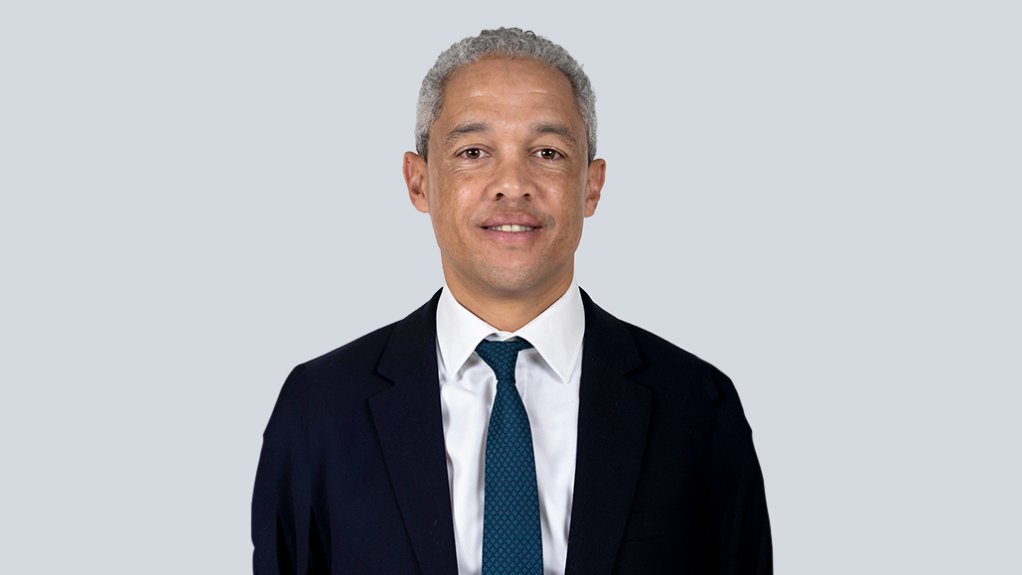


South Africa has demonstrated that it can deliver on its fiscal targets and its structural reform agenda, and the benefits of latent improving fiscal credibility are already evident in the form of lower borrowing costs and a stronger currency, National Treasury director-general Dr Duncan Pieterse has said.
According to the National Budget tabled in February, South Africa's debt-to-GDP ratio stabilised for the first time since before the 2008 global financial crisis, and was expected to decrease to 76.5% by 2028/29. The country also posted a third consecutive primary surplus, he said in a prepared speech.
“A look at the numbers shows that a turnaround is under way in South Africa. We are not yet where we want to be, and more work lies ahead, especially in the current global environment, but we are on track to get there.”
Debt had stabilised and is forecast to decline this year and over the medium term. The primary surplus is forecast to grow. The main budget deficit, which came in at 4.3% against the February estimate of 4.6%, is also projected to fall to 3.1% by 2029.
For the past three years, South Africa's fiscal strategy has been anchored by two objectives, namely stabilising and then reducing the debt-to-GDP ratio; and increasing the primary surplus where revenue exceeded non-interest spending.
These twin objectives would be reinforced by a formal fiscal rule, which would be announced at the Medium Term Budget Policy Statement in October, that would provide a permanent, binding mechanism to lock in the fiscal gains achieved in recent years, strengthen policy credibility and further lower South Africa's risk premium, he noted.
Further, the energy supply and price shocks triggered by the US-Iran war shortly after the Budget in February were a major test of the resilience of the fiscal framework.
Ratings agency Moody’s put South Africa’s rating on positive outlook in May, and rating agency S&P affirmed its positive outlook on South Africa after upgrading the country's rating by one notch in November and placing it on positive outlook for a further upgrade.
Both agencies pointed to the potential for further improvements in South Africa’s fiscal performance and the continued execution of structural reforms as reasons for the positive outlook. Both agencies see the country reducing debt over the next three years, as it had committed to.
Additionally, while they had reduced their growth forecasts for the country, they still expected the growth rate to improve, as structural reforms continued to advance, Pieterse noted.
“The ratings are still in subinvestment-grade territory, but, for the first time in more than a decade, we are seeing a turnaround in the downward ratings trend.”
The country's borrowing costs have come down in response to progress on fiscal consolidation, and the 2025 decision to reduce South Africa’s inflation target.
Between the 2025 and 2026 Budgets, the domestic government bond yield curve shifted downward by 240 basis points on average across maturities, said Pieterse.
Treasury's confidence that the country would deliver on its fiscal targets, despite the headwinds of the US-Iran conflict had been further reinforced by its greater confidence that South Africa’s medium term growth trend would become strong enough to support fiscal consolidation and, with structural reforms, address its severe unemployment and inequality challenges.
GDP had accelerated sharply in the second half of 2025 and the growth rate for the year, at 1.1%, was double that of the previous year. The February Budget projected a path to 2% GDP growth by 2028, underpinned by supply-side improvements in energy availability and logistics volumes that would drive higher investment, exports and corporate profits.
“We will update our forecasts in the light of the latest global headwinds, but South Africa’s improved growth outlook rests primarily on structural tailwinds not cyclical challenges.”
Additionally, fixed investment data already showed an inflection point, with two consecutive quarters of expansion in 2025 after a long period of negative growth. This signalled rising investor confidence and early returns from reforms, Pieterse added.
A major driver of recent confidence, including from ratings agencies, had been steady progress in the implementation of structural reforms, he said.
The country was transforming its electricity sector to achieve energy security and drive down prices. The pipeline of new private renewable-energy projects reflected the success of reforms to open up the market in 2021.
The newly established National Transmission Company South Africa said 24 GW of projects were engaged in the grid connection process for connection over the next six years.
A task team, on which Pieterse served as chairperson, was guiding the establishment of a fully independent Transmission System Operator, which would be essential to ensuring South Africa had a competitive market for electricity that could drive down prices.
Further, the National Energy Regulator of South Africa approved the licence conditions for the market operator in May, which was a key milestone for the implementation of the wholesale electricity market, Pieterse said.
In logistics, private concessions were being rolled out, and the 25-year concession for the Durban Container Terminal Pier 2 signed in January had already translated into operational improvements, he added.
Additionally, the State-owned Transnet Rail Infrastructure Manager had been separated from Transnet Freight Rail, and the Transnet National Ports Authority was also being unbundled.
“We are already seeing the green shoots of these reforms, as 2025 was the strongest year for port volumes since the Covid-19 pandemic and the strongest for rail since 2022.”
Further, Treasury viewed infrastructure reform as key to boosting growth and job creation and was a particular focus for the Treasury, Pieterse highlighted.
Treasury had implemented a series of reforms to attract large-scale private investment and to speed up public sector infrastructure delivery and make it more effective. It had also reformed its Budget Facility for Infrastructure to make it more effective, he said.
“The Budget shows a crucial shift in government’s own spending priorities, towards investments that grow the economy. Spending on new infrastructure, as well as upgrades and refurbishment of existing infrastructure, is the fastest growing item of expenditure, increasing by almost 10% a year over the medium term, which was above the overall 3.9% increase in consolidated spending.”
Over the next few years, the State-owned Passenger Rail Agency of South Africa would benefit from a R23.1-billion investment in signalling systems across its network and a R7.4-billion increase to its operations budget to allow it to continue opening new lines.
A further R5.7-billion would ensure its rolling stock programme continued to deliver new trains, as the signalling investments allowed more trains onto the network, Pieterse revealed.
Treasury also launched a new credit guarantee vehicle in partnership with international organisation the World Bank, which would be operational this year. It would derisk private investment in megaprojects, such as new electricity transmission, without increasing contingent liabilities through the issuance of government guarantees.
Meanwhile, municipal reforms were crucial to support higher investment, growth and job creation, as the state of some of South Africa’s big cities and its smaller municipalities had become a serious constraint to economic activity.
From Treasury’s side, the February Budget marked the point where Treasury was moving from oversight to active structural intervention in municipalities that were in financial distress.
In March, it launched the Metro Trading Services Reform, which incentivised municipalities to ring-fence their trading services, such as electricity, water and refuse collection, and ensure the revenues from these services were re-invested in infrastructure to support them.
A total of R54-billion has been allocated over the medium term to support this programme.
“We remain focused on the targets to improve the health of South Africa’s public finances. Reducing public debt to more sustainable levels will help to enable higher growth by lowering the cost of capital and supporting accelerated investment.”
Article Enquiry
Email Article
Save Article
Feedback
To advertise email advertising@creamermedia.co.za or click here
Research Reports
Projects


Latest Multimedia

Latest News


Showroom

ESAB South Arica, the leading supplier of high-end welding and cutting products to the Southern African industrial market is based in...
VISIT SHOWROOM
Developed to exceed the latest EN 15964 standards for police breathalysers proving that it will remain accurate and reliable for many years to come.
VISIT SHOWROOM

Announcements
What's On
Subscribe to improve your user experience...
Option 1 (equivalent of R125 a month):
Receive a weekly copy of Creamer Media's Engineering News & Mining Weekly magazine
(print copy for those in South Africa and e-magazine for those outside of South Africa)
Receive daily email newsletters
Access to full search results
Access archive of magazine back copies
Access to Projects in Progress
Access to ONE Research Report of your choice in PDF format
Option 2 (equivalent of R375 a month):
All benefits from Option 1
PLUS
Access to Creamer Media's Research Channel Africa for ALL Research Reports, in PDF format, on various industrial and mining sectors
including Electricity; Water; Energy Transition; Hydrogen; Roads, Rail and Ports; Coal; Gold; Platinum; Battery Metals; etc.
Already a subscriber?
Forgotten your password?
Receive weekly copy of Creamer Media's Engineering News & Mining Weekly magazine (print copy for those in South Africa and e-magazine for those outside of South Africa)
➕
Recieve daily email newsletters
➕
Access to full search results
➕
Access archive of magazine back copies
➕
Access to Projects in Progress
➕
Access to ONE Research Report of your choice in PDF format
RESEARCH CHANNEL AFRICA
R4500 (equivalent of R375 a month)
SUBSCRIBEAll benefits from Option 1
➕
Access to Creamer Media's Research Channel Africa for ALL Research Reports on various industrial and mining sectors, in PDF format, including on:
Electricity
➕
Water
➕
Energy Transition
➕
Hydrogen
➕
Roads, Rail and Ports
➕
Coal
➕
Gold
➕
Platinum
➕
Battery Metals
➕
etc.
Receive all benefits from Option 1 or Option 2 delivered to numerous people at your company
➕
Multiple User names and Passwords for simultaneous log-ins
➕
Intranet integration access to all in your organisation